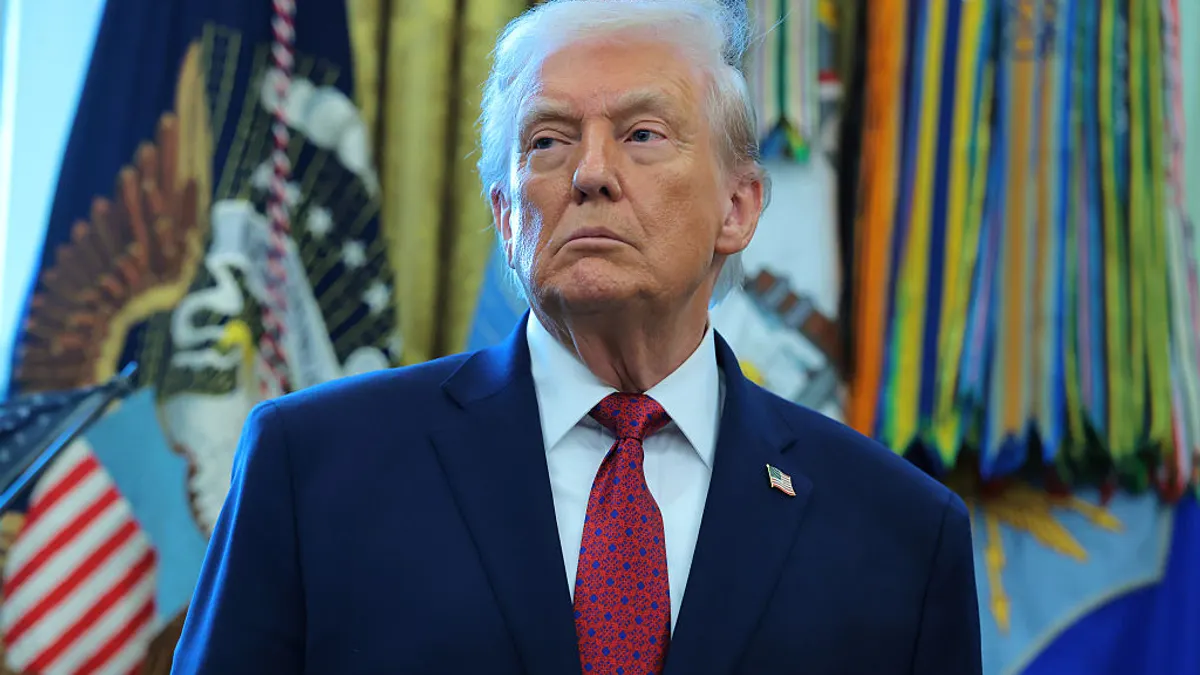
President Donald Trump has signed a sweeping new proclamation significantly expanding United States travel restrictions, increasing the total number of affected countries to 39. The order was signed on Tuesday, December 16, 2025, and builds on the administration’s earlier policy titled “Protecting the United States From Foreign Terrorists.” The new measures are set to take effect on January 1, 2026.
Under the proclamation, countries are categorized into full and partial travel restrictions, based on what the administration describes as serious deficiencies in vetting systems, information-sharing, and national security cooperation.
The full ban list has been expanded with the addition of Burkina Faso, Mali, Niger, South Sudan, and Syria. Laos and Sierra Leone, previously under partial restrictions, have now been upgraded to full bans. In a notable development, individuals holding travel documents issued by the Palestinian Authority are also fully barred from entering the United States.
Meanwhile, 15 countries have been placed under partial restrictions, with concerns cited including terrorist threats and high visa overstay rates. The affected nations include Angola, Benin, Côte d’Ivoire, Gabon, The Gambia, Malawi, Mauritania, Nigeria, Senegal, Tanzania, Zambia, and Zimbabwe. Caribbean nations Antigua and Barbuda and Dominica were also added, along with Tonga from Oceania.
The only easing of restrictions applies to Turkmenistan, where the ban on nonimmigrant visas has been lifted following what officials described as “productive engagement.” However, immigrant visas for Turkmen nationals remain suspended.
The proclamation outlines limited exemptions for lawful permanent residents, current visa holders, diplomats, and select athletes, including those participating in the 2026 FIFA World Cup.
The expanded travel restrictions represent one of the most extensive immigration policy actions taken by the Trump administration during this term, reinforcing its focus on national security and border control.