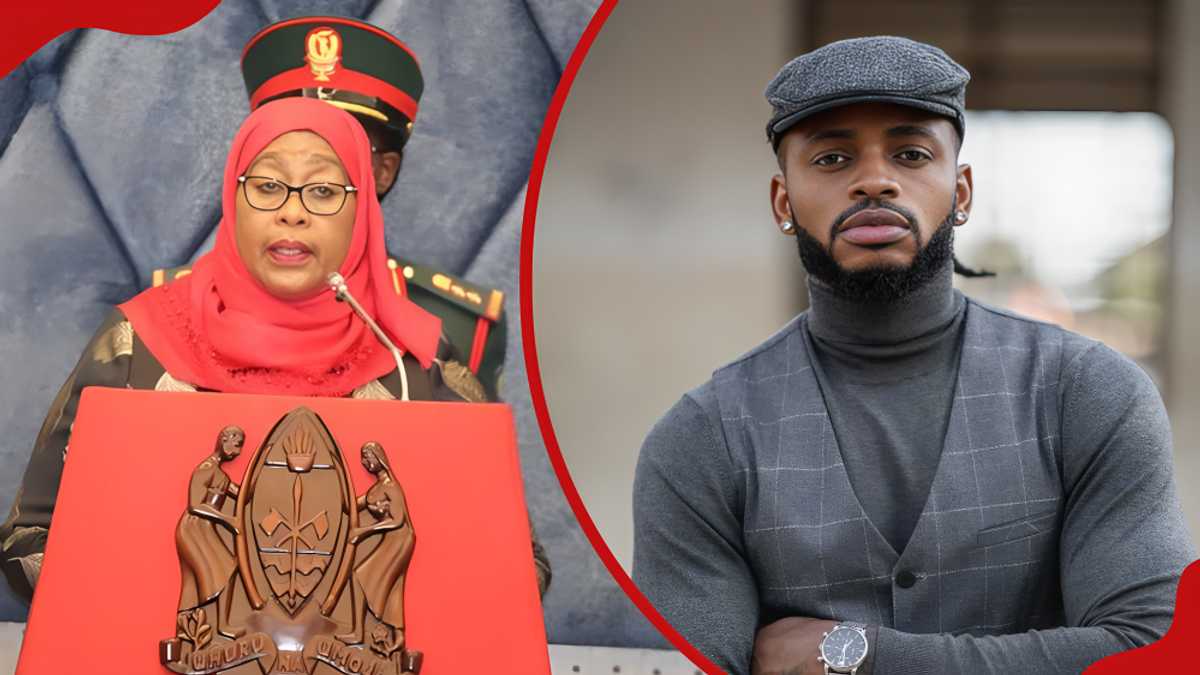
Tanzanian superstar Diamond Platnumz, one of Africa’s most influential and celebrated musicians, has reportedly deleted all songs and videos that promote or praise President Samia Suluhu Hassan’s administration. The move comes amid escalating political unrest and growing public protests that have seen demonstrators begin to target properties associated with the artist and other celebrities seen as close to the government.
According to reports circulating on social media and local news outlets, Diamond’s decision appears to be a strategic attempt to distance himself from the ruling government, following widespread criticism from citizens accusing some artists of being “too cozy” with political elites while the nation grapples with economic hardship, unemployment, and alleged corruption.
The award-winning artist, who has long maintained a close relationship with Tanzania’s leadership, had previously released several patriotic and campaign-style tracks that celebrated national unity, progress, and the President’s vision for the country. However, the current wave of unrest seems to have prompted him to reassess his public image and political affiliations.
Witnesses claim that protesters in Dar es Salaam and other major cities have voiced anger toward celebrities they perceive as government sympathizers. Reports even suggest that some of Diamond’s businesses — including Wasafi-branded outlets and recording studios — have been threatened or vandalized, though these claims have yet to be officially confirmed.
Sources close to the Wasafi CEO say that Diamond is now prioritizing the safety of his team and family while attempting to navigate the delicate political environment. His management has not issued a formal statement, but insiders reveal that he wants to “focus on peace, music, and unity” rather than politics.
Observers note that this development underscores the increasing tension between art, politics, and public sentiment in Tanzania. For years, Diamond Platnumz has been a unifying figure in the region’s music industry, credited with elevating Bongo Flava to international prominence. Yet, as public frustration mounts, even cultural icons are finding themselves under pressure to pick sides — or risk being caught in the crossfire of political polarization.
Meanwhile, government spokespersons have not commented on the singer’s reported withdrawal of support. Analysts say this incident reflects a broader shift in Tanzania’s socio-political landscape, where artists, influencers, and public figures are being held accountable by their audiences in ways that were previously unseen.
As protests continue and tensions rise, fans across Africa are watching closely to see how Diamond Platnumz will navigate this turbulent chapter. Will he remain silent, or will he use his platform to call for peace and reform in a divided nation?
For now, one thing is clear: the power of music — and its relationship to politics — has once again taken center stage in Tanzania’s unfolding story.