
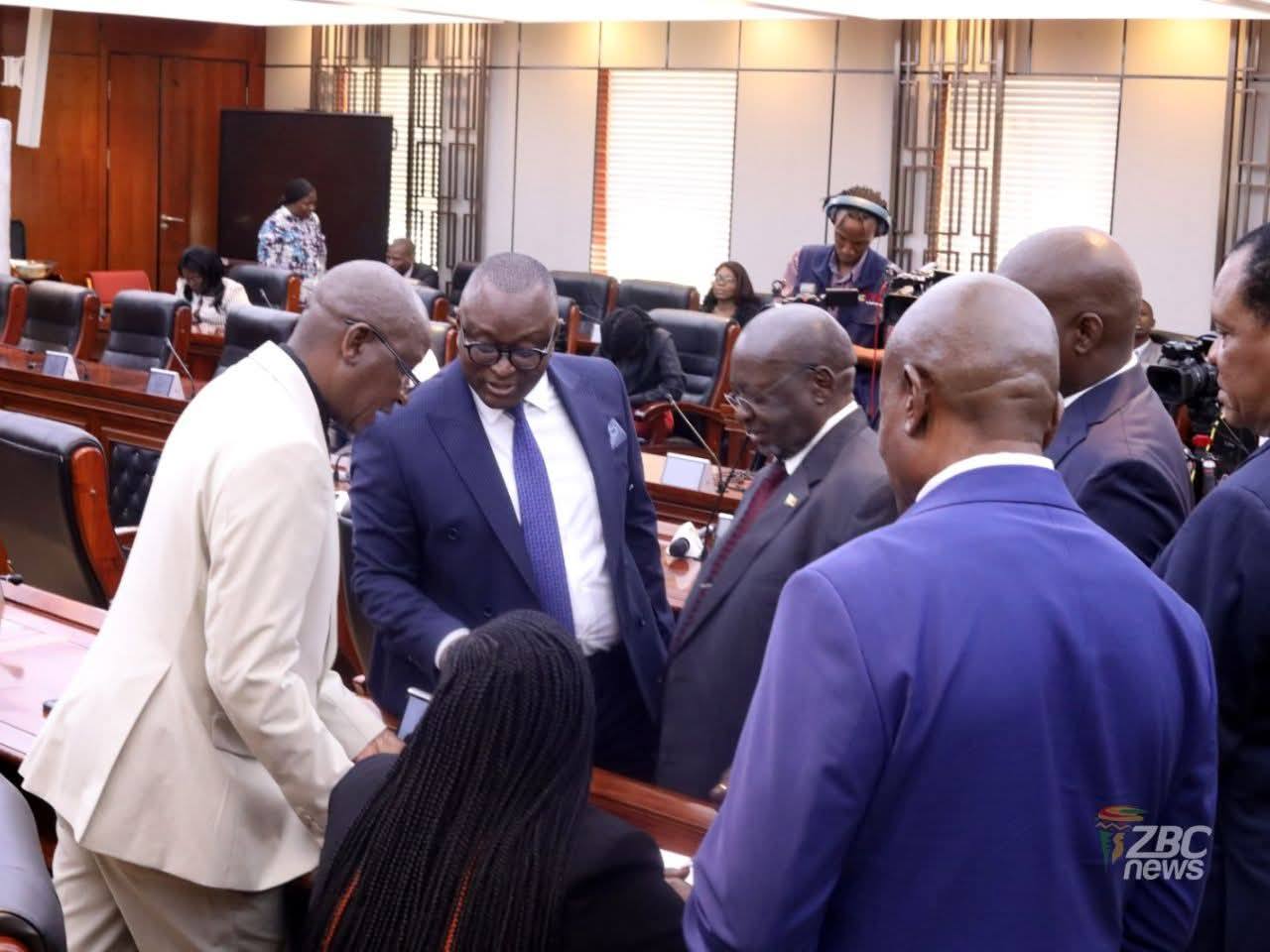
Cabinet has approved a Constitutional Amendment Bill that proposes sweeping changes to Zimbabwe’s governance structure, including extending the terms of office for both the President and Members of Parliament from five years to seven years. The Government says the proposed reforms are aimed at promoting political and economic stability, reducing election-related disruptions, and allowing long-term national development programmes to be implemented more effectively.
The Bill was presented by the Minister of Justice, Legal and Parliamentary Affairs, Honourable Ziyambi Ziyambi, during the first Cabinet meeting of 2026 held in Harare on Tuesday. Following the meeting, the Minister of Information, Publicity and Broadcasting Services, Dr Jenfan Muswere, outlined the key provisions of the proposed amendment during a post-Cabinet media briefing.
One of the most significant changes contained in the Bill relates to the method of electing the President. According to Dr Muswere, Clause 2 of the Bill seeks to repeal Section 92 of the Constitution and replace it with a new system in which the President would be elected through a parliamentary process rather than by direct popular vote.
Under the proposed arrangement, a presidential candidate would be required to secure a majority vote in Parliament. If no candidate achieves an absolute majority in the initial vote, provisions would be made for a run-off process. The election would be overseen by the Chief Justice or a designated judge to ensure the process is conducted properly and in line with constitutional standards. The procedure would follow the Standing Rules and Orders of Parliament.
In addition to altering the presidential election process, the Bill also proposes amendments to Sections 95, 143, and 158 of the Constitution to extend the current five-year term of office for both the President and Parliament to seven years.
Dr Muswere said the rationale behind the proposed changes is to create a more stable political environment. He stated that frequent elections can disrupt governance and economic planning, and that longer terms would enhance policy continuity and provide sufficient time for the implementation of long-term national projects. According to Government, the reform is designed to strengthen stability and allow leaders to focus on development priorities without constant electoral pressures.
Justice Minister Ziyambi Ziyambi outlined the legislative path the Bill will now follow. After Cabinet approval, the proposed amendment will be sent to Parliament for gazetting, as required by the Constitution. He explained that while ordinary Bills require 21 days for gazetting, a Constitutional Amendment Bill must be gazetted for 90 days before it can proceed further.
Following gazetting, public consultations will be conducted in line with constitutional requirements. The Minister indicated that once the Bill is public, citizens and stakeholders will be invited to provide input and express their views. The duration of the consultation process will depend on Parliament’s calendar.
The proposed amendment is expected to generate significant public debate, given its implications for Zimbabwe’s electoral system and governance structure. As the Bill moves through the parliamentary and consultation stages, it will likely attract attention from political parties, civil society organizations, and the broader public.
Further updates are expected as the legislative process unfolds.